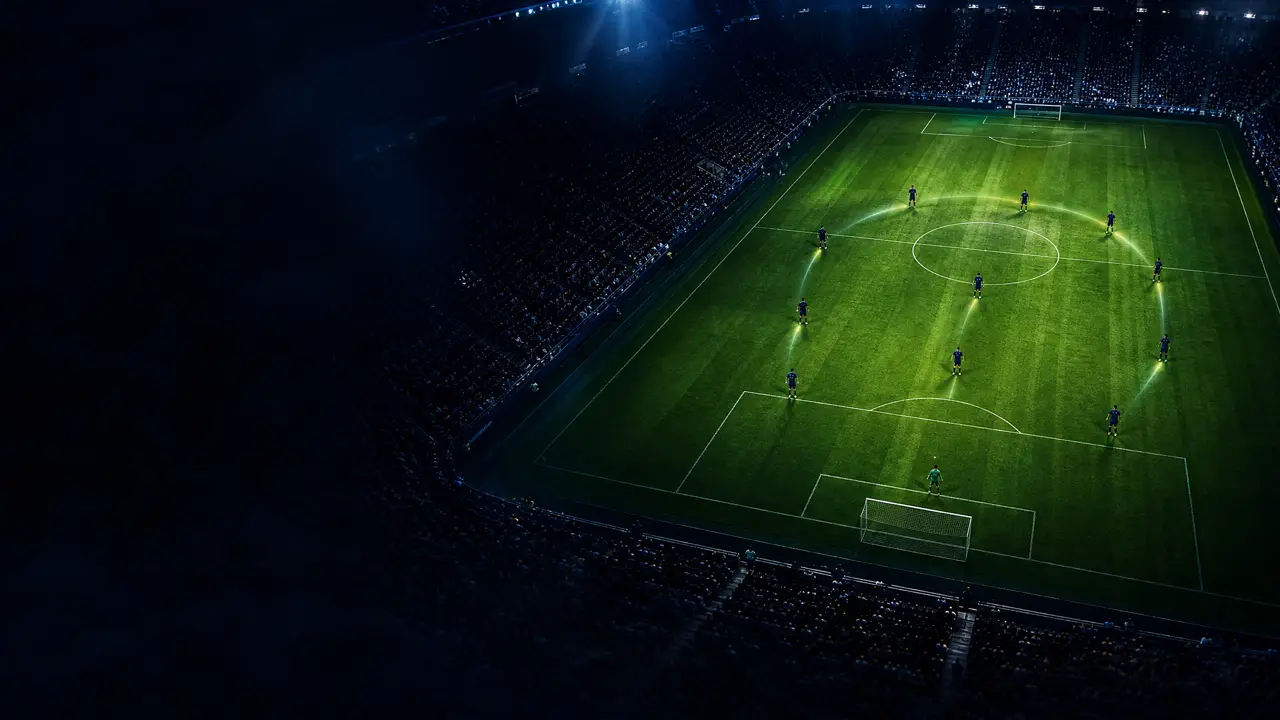
Building Out from the Back: How to Read an Attack from the First Pass
A practical guide to building out from the back: how goalkeeper and centre-back positioning, drawing the press and passing lanes shape the attack from the first pass.
Building out from the back starts with a clear decision at the first touch. Whether a team opts to circulate possession or commit to a forward move, the attack is shaped by goalkeeper and centre-back positioning, how the press is drawn, and the use of passing lanes between lines.
Why start attacks from the back?
Beginning attacks from the back is both a possession strategy and a spatial one. It forces opponents to organize their pressing structure, creating moments when lines are stretched and gaps open. A well-read first pass either sets the team on a controlled progression through the lines or becomes the trigger for a quicker, vertical transition.
Goalkeeper positioning and influence
The goalkeeper is the first decision-maker. Where the keeper stands relative to the goal line and how they receive and distribute the ball define whether short options are available. A higher goalkeeper gives defenders more room to receive and rotate; a deeper keeper can reduce risk but compresses passing lanes for the defensive pair.
Centre-backs: handling the first pass
Centre-backs must read the game instantly after receiving the ball. The first pass to a centre-back is evaluated against the opponent’s forward positions and the availability of midfield support. Complementary movement—one centre-back stepping out while the other occupies the inside lane—creates usable channels. Short combinations, lateral shifts, and timing of forward passes reduce the chance of turnovers in dangerous areas.
Drawing the press to create space
Dragging the press is an intentional maneuver: a forward or wide run can pull an opponent out of position, or a quick change of direction can unbalance a compact press. The aim is to create gaps between lines or a corridor behind pressing defenders. Timing and coordinated movement are essential, otherwise the team may lose positional balance and be vulnerable to counters.
Passing lanes between the lines
Passing lanes between defense and midfield—or midfield and attack—are often the prime scoring corridors. They are opened by:
- off-the-ball runs by forwards or wingers that distract markers;
- short, precise passes from centre-backs into a free midfielder;
- vertical passes timed to split the opponent's block.
A pass between the lines works best when the receiver moves into the lane or immediate support is nearby to sustain possession and progress the move.
The free midfielder and transitional control
A free midfielder plays a central role by receiving from the back and deciding whether to progress, recycle, or switch play. Their spatial awareness and timing determine if the team builds patiently or accelerates into a direct threat. Good teams give this player simple, high-percentage options to avoid forced errors under pressure.
When to switch to direct play
Switching from patient build-up to direct play is a tactical decision driven by context: persistent pressure, loss of tempo, or the need for a quick change in rhythm. The shift should be collective—wide players must be ready to press or attack second balls and the team should accept the trade-off between territory and controlled possession.
Observational tools for coaches
Watching multi-angle replays helps coaches and players spot weak points in build-up patterns. Some viewers use high-resolution services like Rowad4K for clearer tactical review if it is available and legally accessible, but sound analysis relies on pattern recognition rather than a single clip.
FAQ
Is building from the back always preferable?
No. Building from the back is beneficial when space and opponent structure allow it. Under constant aggressive pressure or when quick goals are needed, direct play can be more effective.
How can a team handle coordinated high pressing?
Tactically: draw one presser out, switch the ball quickly across the pitch, or use the free midfielder to receive in tight spaces. Rehearsed passing sequences and off-the-ball support reduce the risk of turnovers.
What if the goalkeeper is uncomfortable with the ball at their feet?
Adjust by having centre-backs play a larger role in initiating build-up, while the goalkeeper focuses on long distribution and shot-stopping. This demands a clear plan for how to use the long ball and who will challenge for second balls.
Conclusion: a practical takeaway
Practical drill: run a three-stage practice where the keeper passes to a centre-back, the ball is moved to a free midfielder, and then the team either completes a vertical pass or recycles under pressure. Make the first option the default and the direct pass the contingency. Repeating this pattern improves decision timing, communication, and the ability to read an attack from the first pass.
Share this article